
Every year around the first hard freeze, we start seeing the same customer walk into our Bridgeville shop. The car is fine. The tire looks fine. But one corner keeps going soft, and by January they are stopping at the air pump every few days. That tire held air all summer without a thought, and now it cannot get through a week.
Nine times out of ten, nobody ran over anything. The tire is not the problem. The wheel is.
Why a tire slow leak in Bridgeville PA only shows up in winter
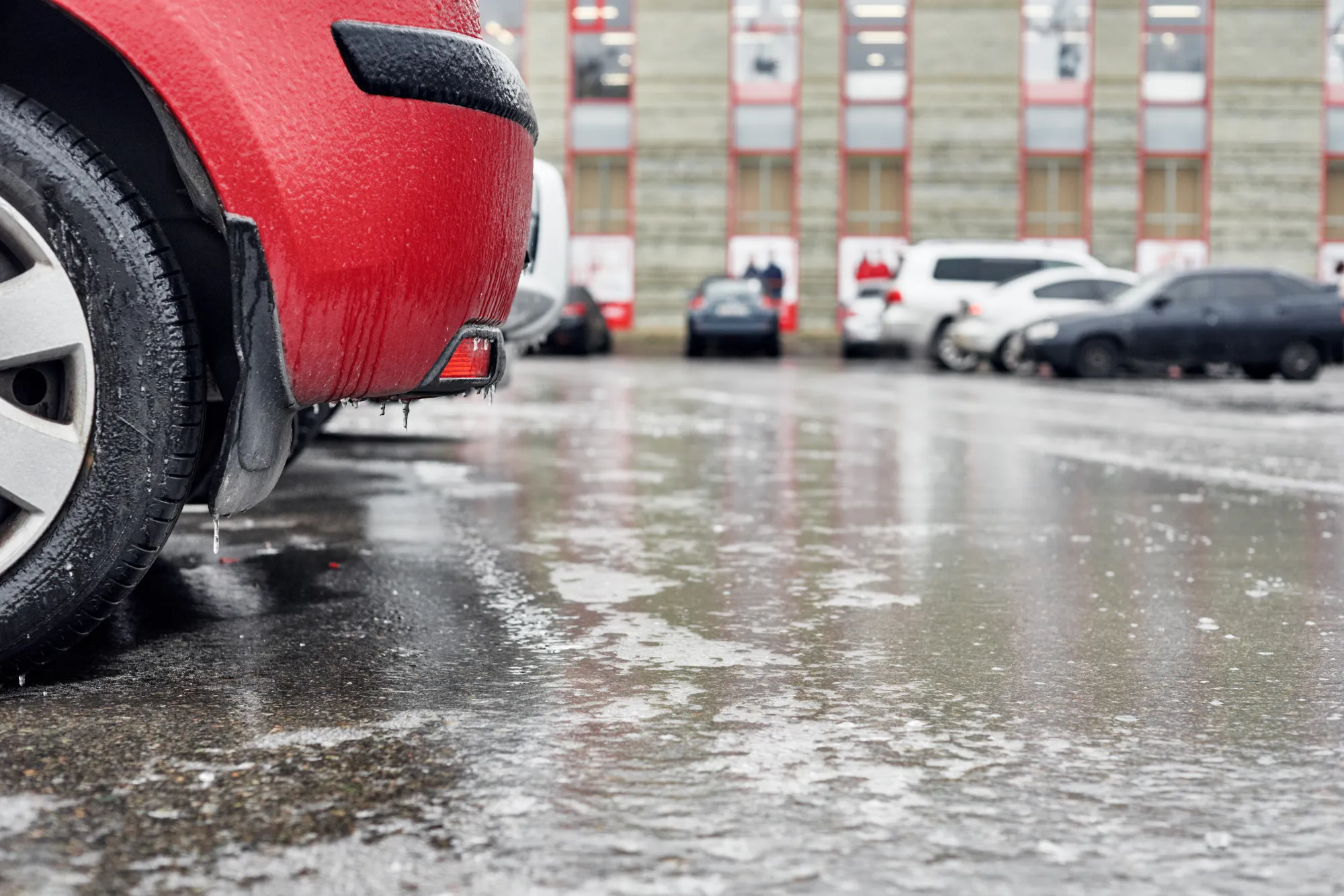
Southwestern Pennsylvania throws a lot of salt at its roads. According to PennDOT, the department has used an average of 801,453 tons of salt on Pennsylvania roads over the past five winters, and salt does its best work when traffic is crushing it and spreading it across the pavement. That is exactly what your commute does. Every mile on I-79, Route 50 or Route 88 in slush is a mile of salty spray packed into the wheels.
Salt does not stay on the outside of the rim where you can see it. It works its way into the seam between the tire and the wheel, and that is where a tire slow leak in Bridgeville PA usually begins. Drivers in Upper St. Clair, Canonsburg, Monongahela and the rest of the Mon Valley see the same thing, for the same reason.
Cold weather also makes an existing leak impossible to ignore. The U.S. Tire Manufacturers Association notes that inflation pressure shifts roughly one to two pounds for every 10 degrees of temperature change, dropping as it gets colder. So a wheel that was quietly losing a pound a week in September is now losing that pound plus another two or three the first morning it drops into the twenties. Nothing new broke. The weather just stopped hiding it.
The bead seat, in plain language
Look at a wheel with the tire off and you will see a smooth machined ledge running around the inside of each rim edge. That ledge is the bead seat. The stiff reinforced edge of the tire, the bead, presses against it, and that metal-to-rubber contact is the only thing holding the air in. There is no inner tube in a modern tire and no gasket. The seal is a clean rubber edge squeezed against clean metal.
Now put salt and moisture in between them. Aluminum reacts and forms a white, powdery oxide. That oxide takes up space it has no business taking up, and it physically lifts the tire bead away from the rim. The seal breaks, and air starts working its way out along the rim edge. That is bead leak alloy wheel corrosion, and once it starts, the surface that used to seal is no longer flat, no longer smooth, and no longer sealing.
This is a mechanical problem, not a chemical one that might settle down on its own. There is a physical gap where there used to be contact, and gaps do not close themselves.
Bead leak alloy wheel corrosion, a puncture, or a valve leak: telling them apart
Three different problems produce the same complaint, and they are worth telling apart before you spend money chasing the wrong one.
How fast the air goes: a creep, not a puncture
A nail usually gives you a faster and more consistent leak, and it tends to behave the same in any weather. Bead seat corrosion behaves differently. It shows up as pressure that creeps down rather than a sudden flat, commonly a couple of pounds to as much as ten pounds over a day to three days, with nothing visible in the tread. The tell is the pattern: repeat low-pressure warnings every few days, always the same wheel, always worse when it is cold and wet out.
What you can check yourself in the driveway
Walk around the tire in daylight and look at the tread for anything shiny stuck in it. Check the valve stem where it comes through the wheel for discoloration, chalky white residue or crust around the base. Then look at the rim edge itself, especially the inboard side you can only see if you turn the wheel and peek behind the spokes. White powder or blistered, flaking clear coat along that edge is the classic warning that corrosion has reached the sealing surface.
A spray bottle of soapy water will often find a valve leak or an obvious tread puncture right in your own driveway. It rarely finds a bead leak, because the tire is on the car, the rim edge is hidden, and the leak is a fine seep rather than a stream.
Why we usually have to take the tire off
When a customer brings us a tire that keeps going down and nothing turns up in the tread, the next step is to dismount it. With the tire off and the rim edge exposed, soapy water along the bead area will raise a thin line of fine bubbles right where the seal has failed. At that point we can also see the wheel itself: how far the oxidation has spread, whether the metal underneath is only dulled or actually pitted.
We can also tell you at that point whether it is one wheel or all four. Salt does not usually pick favorites, and a vehicle with one corroded bead seat often has three more a season or two behind it. It is a good moment to read the tread too, because a tire that has been driven low all winter usually shows it in the wear pattern.
TPMS sensor corrosion from road salt is happening at the same time
Here is the part that catches people off guard. The same salt that attacks the bead seat is attacking the tire pressure sensor sitting a few inches away, and many sensors use an aluminum valve stem.
Tire Review explains that road salts, moisture, missing valve caps and galvanic corrosion between dissimilar metals are primary causes of sensor failure. Galvanic corrosion happens when a valve is exposed to road grime, dirt and salt, which set off a chemical reaction that bonds the nut or the valve core to the stem and warps the rubber components. That is also why a brass valve core should never be used with an aluminum sensor. A nickel-plated core belongs there instead.
This is not the same thing as your pressure light flickering on a cold morning because the air inside contracted. That is normal physics and it usually settles once the tires warm up. TPMS sensor corrosion from road salt is damage to the hardware itself, and it does not warm up and go away.
What a corroding sensor looks like
The visible signs are worth knowing, because they show up before the failure does:
- Discoloration or physical damage to the stem where it sticks out of the wheel
- Discoloration around the valve core, which is far more common when the valve cap has gone missing
- Corrosion under and around the retaining nut at the base of the stem
- Resistance or stickiness when the nut or the core is loosened, instead of turning freely
That last one is why we handle these carefully. A stem seized by salt corrosion can snap off during removal, which turns a wheel cleanup into a sensor replacement. It is also why the retaining nut goes back on to a proper torque value, a low number in the range of 35 to 80 inch-pounds depending on the vehicle. Overtightening an aluminum nut does not crush the stem. It puts hairline cracks in the nut.
While the tire is off, it is a sensible moment to think about sensor age too. Sensor batteries are not serviceable and cannot be replaced on their own. Some sensors last around three to five years, others closer to ten, depending on how often they transmit and how the vehicle is driven.
Why topping it off keeps working, right until it does not
Adding air feels like a fix because the gauge reads correct again when you drive away. But the oxidized surface is still there, so the micro-leak along the rim edge is still there, and the air starts leaving again immediately. Meanwhile the corrosion has not stopped spreading, and every winter week adds more salt to the same seam.
The warning light is a late warning, not an early one. A TPMS light is triggered when at least one tire sits at a pressure at least 25 percent below the minimum inflation pressure the vehicle calls for. So a tire can be meaningfully low, handling worse, wearing unevenly and running hotter, well before the dash tells you anything.
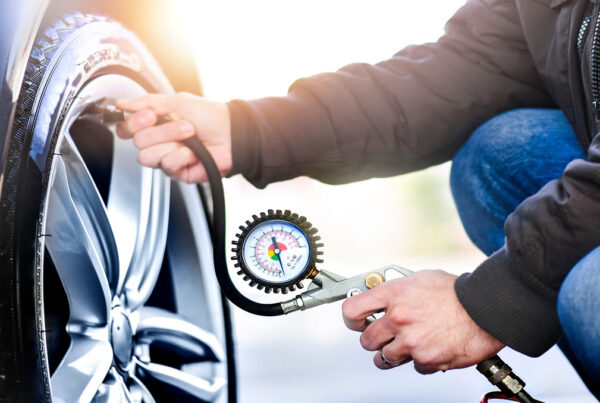
That gap is why the U.S. Tire Manufacturers Association recommends checking your tires at least once a month with a gauge, and reading them cold, which means the vehicle has been parked at least three hours. In winter that means before you leave in the morning, not after you have driven down Washington Pike to work.
The reason we push on this is not the inconvenience of the air pump. It is that a bead leak is unpredictable. It can hold at a slow seep for months, then let go faster after a pothole or a curb strike on a cold night. Allegheny and Washington counties have no shortage of either in February.
What a bead reseal or wheel cleanup involves at the shop
The good news is that this is usually a repair, not automatically a new wheel. Here is how the job normally goes:
- Dismount the tire so the bead seat is fully exposed and can actually be inspected.
- Mechanically remove the oxide buildup from the sealing surface until clean metal is showing.
- Inspect for pitting. Light surface oxidation cleans up. If the pitting is severe, the seat may need to be machined, and a wheel that is badly eaten away or cracked is a different conversation.
- Treat and seal the surface with a corrosion-inhibiting primer and a proper bead sealant.
- Handle the TPMS hardware. Any time the sensor is removed or disturbed, the grommets, nut, valve core and rubber inserts get replaced. Those parts take a set in their original position and lose their sealing ability if they are reused.
- Remount, torque and rebalance, then check that the tire holds pressure before it goes back on the vehicle.
What that adds up to depends on the vehicle. How many wheels are affected, how far the corrosion has gone, whether the seat needs machining, whether the sensor survived removal or has to be replaced and relearned, and whether the tire itself is worth remounting all move the number. That is genuinely why we do not publish a flat figure for this job. Bring the vehicle to Bridgeville or Monongahela, or request a current quote, and we will tell you what your wheels actually need after we look at them.
One more thing worth knowing if you drive here: a wheel like this deserves attention before your Pennsylvania state inspection, since a tire that will not hold pressure and a sensor that will not report are both safety issues, not cosmetic ones.
Keeping it from coming back
You cannot avoid salt on a South Hills commute, but you can make it less of a problem:
- Rinse the wheels, including behind the spokes, during winter thaws. Getting the salt off is most of the battle.
- Keep valve caps on every wheel. They are the only thing shielding the valve core from grime and moisture.
- Go easy with harsh wheel cleaners and close-range pressure washing. Both attack the protective finish that keeps salt off the aluminum in the first place.
- Check pressures monthly, cold, with a real gauge, and pay attention when one corner is consistently lower than the other three.
Trust Big G Tire & Auto for the wheels under your car, not just the tires on them
If one tire has been the needy one all winter, do not keep feeding it air and hoping. Let us pull it off, look at the bead seat and the sensor, and tell you plainly what we find. Most of the time it is a cleanup and a reseal, and you get your Saturday mornings back.
If you have been searching for a tire shop near you that will actually look at the wheel and not just plug the tire, our Bridgeville and Monongahela shops handle this every winter. We would rather see it in November than after it strands somebody in a February parking lot. Schedule an appointment and we will take a proper look.