If your car won’t shift out of Park on a slope, its weight may be pressing against the transmission’s parking pawl. This is commonly called torque lock. It can make the shifter feel jammed even when the brake-shift interlock is working correctly.
If pressing the brake firmly does not release the shifter, the cause may be a faulty brake-light switch, weak battery, blown fuse, damaged wiring, failed interlock solenoid, or worn shifter part. Do not force the lever. Secure the vehicle, try the safe checks below, and arrange for a professional diagnosis if it remains stuck.
Why a slope can make Park feel jammed
Inside an automatic transmission, the parking pawl helps hold the vehicle in place when you select Park. If the vehicle rolls slightly after you shift into Park, its weight can settle against the pawl.
Gravity puts more pressure on this mechanism when the vehicle is parked on a grade. General Motors describes torque lock as a condition in which the vehicle’s weight places too much force on the transmission parking pawl. Pulling the selector out of Park may then require more effort than usual or feel impossible.
Torque lock is likely when:
- The vehicle was parked on a grade and rolled slightly after Park was selected.
- The shifter works normally on level ground.
- The lever feels firmly loaded, not loose or disconnected.
- The problem goes away once pressure is taken off the parking pawl.
This does not necessarily mean the transmission has failed. Still, yanking the shifter or repeatedly pressing its release button can damage the selector mechanism. If firm brake pressure does not let the selector move, stop pulling harder.
How the brake-shift interlock releases Park
Modern vehicles generally have a brake-shift interlock that prevents the selector from moving out of Park accidentally. The exact requirements vary by model, but the ignition or power mode usually must be on and the brake pedal must be pressed.
Toyota’s owner guidance explains that the shift-lock system prevents unintended selector operation. It allows shifting from Park only when the vehicle is in the required power mode and the driver is pressing the brake pedal.
The brake-light switch is part of that process. Pressing the brake pedal activates the brake lights and sends a brake-applied signal to the shift-interlock system. A National Highway Traffic Safety Administration investigation report explains that this signal allows the interlock solenoid to retract its locking pin so the selector can move.
If the switch has failed or is out of adjustment, the vehicle may not detect that you are pressing the brake. The selector can stay locked even with your foot firmly on the pedal.
Checking the brake lights is a useful first step. If they do not come on when you press the pedal, the problem could involve the brake-light switch, a fuse, wiring, or another part of the circuit. Working brake lights do not eliminate every possible interlock fault, so treat this check as a clue rather than a diagnosis.
Safe checks to try before forcing the shifter
First, make sure the vehicle cannot roll. Keep the service brake pressed, set the parking brake firmly, and check that the area around the vehicle is clear. Be especially careful on a slope.
Next, try these basic checks:
- Confirm the operating mode. Make sure the ignition or power mode matches the instructions in your owner’s manual.
- Press the brake pedal firmly. A light touch may not activate a misadjusted brake switch.
- Check the brake lights. Ask someone to observe them from a safe spot, or use a reflection if practical. Never have someone stand directly behind a vehicle that could move.
- Watch for low-battery symptoms. Dim dashboard lights, clicking during a start attempt, or erratic accessories may point to a weak 12-volt battery or poor electrical connection.
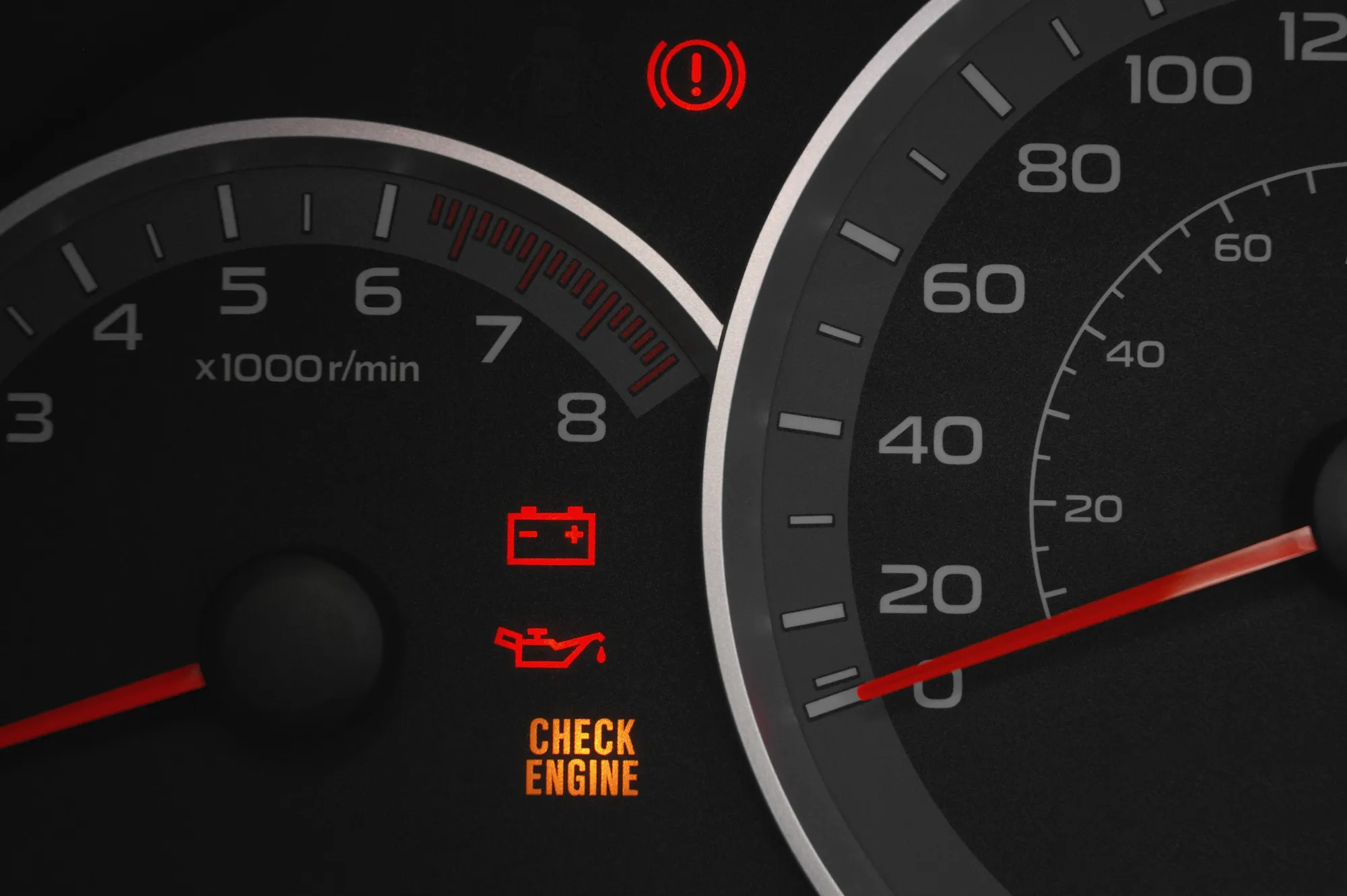
- Read the instrument panel. Look for warnings related to the shift system, transmission, brakes, battery, or power mode.
- Notice how the shifter feels. A sticky button, unusual stiffness, looseness, or a gear display that does not match the lever position may indicate a selector problem.
Do not yank the lever repeatedly or pry around the console. Extra force can turn a small interlock or adjustment problem into a damaged shifter assembly.
When should you use the manual shift-lock release?
Many vehicles have a manual shift-lock release under a small cover near the shifter. Its location and operation differ by model, so follow the owner’s manual for your exact vehicle.
The override lets you move the selector during an emergency. It does not fix the underlying problem. Toyota’s guidance tells drivers to set the parking brake and press the brake pedal before using the shift-lock override.
Before using it:
- Set the parking brake firmly.
- Hold the service brake down.
- Follow the instructions in your owner’s manual.
- Be ready to control the vehicle if it starts to move.
- Use the release only when you must reposition the vehicle or prepare it for professional assistance.
Once the selector leaves Park, the parking pawl is no longer holding the vehicle. That creates an immediate concern on a grade. If you cannot keep the vehicle secure, do not use the override.
Even if the manual release works, the original fault is still present. Have the vehicle diagnosed instead of using the override each time you drive.
What other faults can keep the selector in Park?
If pressure on the parking pawl is not causing the problem, look for an electrical or mechanical fault.
Weak battery power or poor connections
Many shift-interlock systems use an electrically operated release. A weak 12-volt battery, loose battery connection, or another power-supply problem can keep the solenoid from releasing.
Battery trouble is more likely if the stuck shifter comes with dim lights, slow starting, clicking, or accessories that work unpredictably. Battery and electrical-system testing can confirm whether the interlock is receiving the correct voltage.
Fuse, wiring, or interlock-solenoid trouble
A blown fuse, damaged wire, poor electrical connection, or failed interlock solenoid can interrupt the release circuit. Depending on the affected part, the brake lights may still work.
Electrical testing may be needed to determine if the fault is in the switch, power supply, ground, wiring, or solenoid.
Shifter and cable problems
Parts inside the selector can wear out, bind, break, or fall out of adjustment. Possible trouble spots include:
- The shifter release button
- The mechanism inside the console
- Shift cables and cable bushings
- Electronic selector parts
- Position sensors or gear indicators
NHTSA documentation identifies a shift cable that connects the selector mechanism to the transmission on vehicles with that design. If the cable or one of its bushings fails, moving the shifter may not move the transmission selector correctly.
Have the vehicle checked if the lever feels loose, unusually stiff, or disconnected. The same applies when the dashboard shows a different gear from the lever position or does not recognize Park.
When is professional service the safer next step?
Stop troubleshooting and arrange service when:
- The brake lights do not come on.
- The selector repeatedly gets stuck.
- You need the manual override.
- The shifter button sticks or the lever feels unusual.
- The gear display does not match the selector position.
- Battery or electrical problems appear at the same time.
- The dashboard shows a brake, shift-system, transmission, or electrical warning.
- You cannot securely hold the vehicle in place.
- The selector remains stuck after the basic checks.
Several faults can cause similar symptoms, so replacing a part based on one clue may not solve the problem. Proper testing can determine whether the cause is parking-pawl pressure, a faulty brake-light switch, low battery voltage, a fuse, wiring, the interlock solenoid, or a shifter component.
How can you reduce torque lock next time?
When parking on a South Hills slope, use the parking brake to hold the vehicle’s weight instead of letting that weight settle against Park. Follow any model-specific instructions in your owner’s manual.
- Stop the vehicle and keep the service brake pressed.
- Set the parking brake firmly.
- Let the parking brake secure the vehicle.
- Select Park.
- When leaving, hold the service brake and shift out of Park before releasing the parking brake.
This routine reduces pressure on the transmission’s parking pawl and can make the selector easier to move the next time you drive.