Brake pads wearing unevenly at one wheel can point to a brake that is binding or failing to release properly. Sticking caliper parts, pads caught in their bracket, or a restricted brake hose can leave one side more worn than the other. For drivers in Bridgeville and Monongahela, the useful next step is a brake inspection that explains the difference before new pads go in.
Usable material at the opposite wheel does not rule out a problem on the worn side. A technician needs to compare the pads, check movement, and distinguish a mechanical problem from a hydraulic restriction. Replacing friction material without identifying the cause can leave that cause unresolved.
Start by Comparing the Pads at Both Wheels
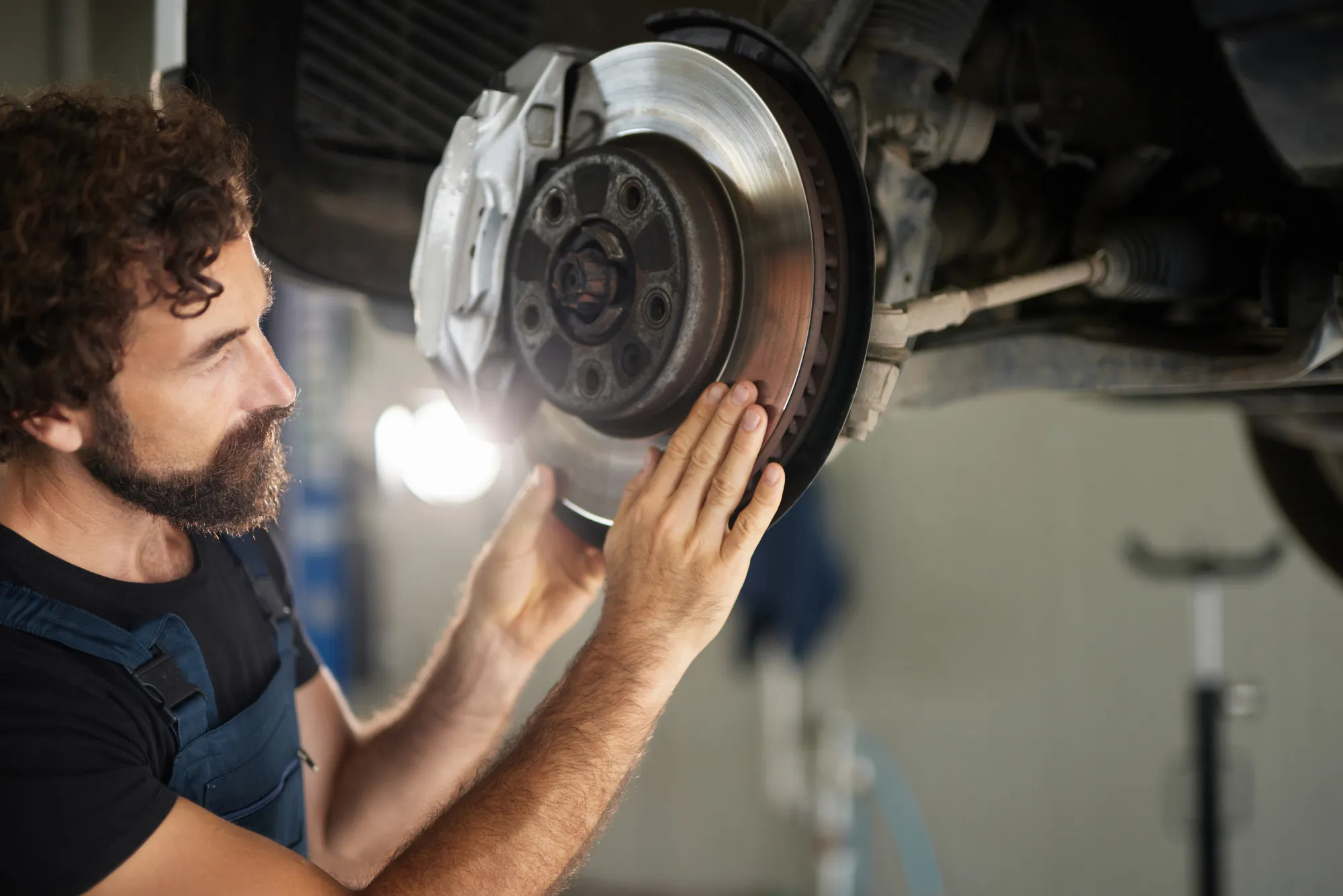
A useful inspection goes beyond looking at the pad visible through the wheel. Wagner’s pad inspection procedure includes removing the wheel, caliper and pads so their condition can be examined. That gives the technician a better basis for comparing the inner and outer pads rather than judging the whole brake by one visible surface. Wagner’s pad inspection guide describes this process.
Ask for the findings to be identified by position: left inner, left outer, right inner and right outer on the affected axle. That makes “one side is worn” more useful. Is just one pad much thinner, or are both pads at that wheel more worn than their counterparts?
For example, suppose the left inner pad is noticeably thinner than its outer partner and the pads at the right wheel. That example gives the technician a starting point for testing. The next question is what the movement and hydraulic checks reveal.
When reviewing that example with the technician, ask to see the inner and outer pads together, with their wheel positions identified. If you are shown only the better-looking outer pad from the opposite wheel, ask how the remaining pads compare. The goal is to understand the whole wear pattern, including the pad that prompted the replacement recommendation.
A helpful explanation should connect the comparison to the recommendation. “This pad has little material left” explains why friction material needs attention. “This component is binding” helps explain why the wear developed unevenly. Those are related findings, but they answer different questions.
Check Caliper Movement and Pad Fit
The inspection should include the caliper’s moving parts and the places where the pads sit. According to Wagner, damaged boots, restricted slide-pin movement and rust beneath the pad support clips all deserve attention. Rust at those seating surfaces can make a pad bind. Its caliper and rotor inspection guide also calls for checking both rotor wear surfaces.
The technician checks whether the slide pins move freely and whether the pads can move correctly in their bracket. The caliper and slide-pin boots are examined for tears or cracks. A pad that is tight in its bracket calls for attention to that fit, rather than an assumption that the piston is the only possible problem.
This is why a recommendation may involve hardware or bracket attention as well as pads. The inspection needs to establish which parts are binding and which remain serviceable.
Could a Brake Hose Be the Cause?
Yes. A restricted rubber brake hose can be involved when one wheel’s brake pads are wearing faster. It is a separate possibility from seized slides or a sticking piston.
Wagner identifies a useful diagnostic distinction: when a piston is difficult to retract, a technician can assess whether relieving hydraulic pressure changes its movement. Movement that improves points toward a hose restriction; continued binding points toward a problem within the caliper. This helps explain why a stiff piston should prompt testing before a replacement decision. Wagner’s inspection checklist outlines these checks.
The same checklist notes that an outer pad worn much more than its inner partner can suggest seized slide pins, while a worn inner pad paired with a nearly new outer pad can suggest a dragging piston. These patterns guide the inspection; appearance alone should not settle the diagnosis.
Ask what the inspection found: binding parts, a hose restriction, or something else? A recommendation for a caliper or hose should explain that evidence.
If a caliper is recommended, a useful follow-up is: “Which part of its movement failed the check?” If a hose is recommended, ask: “What test pointed to a restriction?” These questions help connect the proposed part to the actual finding. You do not need to choose between those diagnoses yourself; the inspection should provide the reason for that choice.
What Needs Attention Before Replacement Pads Go In?
The repair plan should address both the worn material and whatever caused it to wear unevenly. Depending on the findings, that may mean attention to binding hardware, a caliper problem or a restricted hose. Uneven wear by itself is not a reason to assume all those parts need replacement.
Ask the written repair plan to separate the pads that need replacement from the work intended to correct their uneven wear. For each additional item, look for an explanation of its condition and the reason it belongs in this repair.
The rotor also needs an assessment. Both its inner and outer wear surfaces matter, including excessive wear or rust. A decision about rotor work should follow that assessment rather than rely solely on how the pads look.
Big G Tire & Auto lists inspections of pads, rotors, calipers, hoses and hardware among its brake services, along with pad replacement, rotor resurfacing or replacement, and caliper and hose service. The findings determine which of those services the vehicle needs. Ask the shop for a current quote based on that repair plan.
For readers considering the broader inspection visit, the shop’s guide to what to expect at a PA state vehicle inspection provides related preparation information. For this specific complaint, the useful repair explanation should include:
- Which pads are worn and how their condition compares across the axle.
- Which movement or hydraulic checks identified the cause.
- Whether the rotor or hardware needs attention, and why.
- How the proposed work addresses the cause before replacement pads are installed.
That explanation lets you distinguish a pad replacement recommendation from the additional work needed to correct uneven wear.